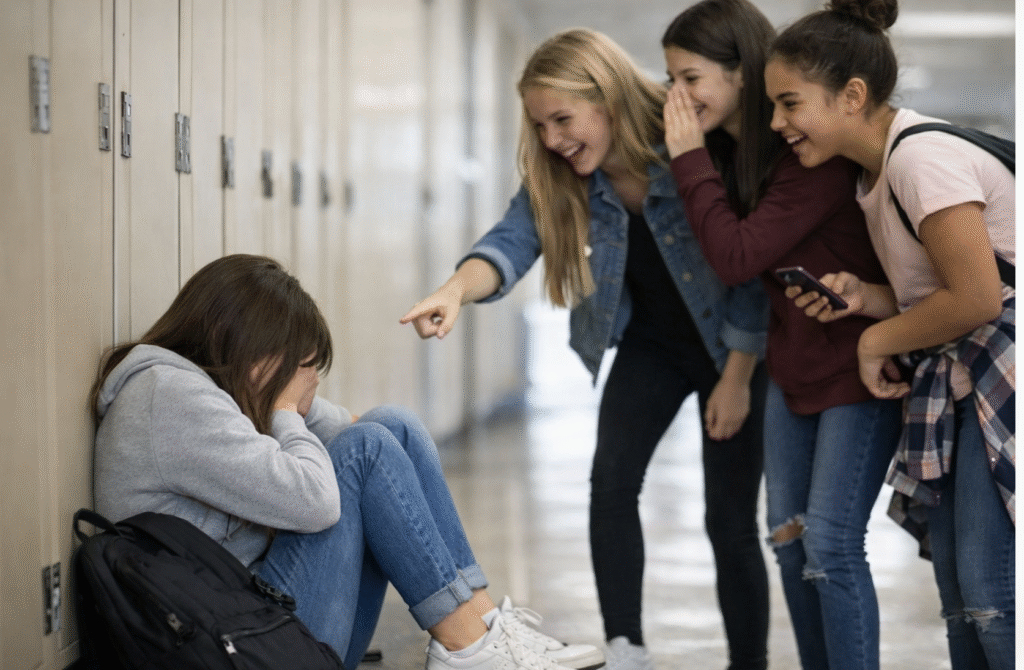
✨I was that mom ✨
'when bullying is ignored, everyone is hurt.'
The one who sent emails.
Who made phone calls.
Who asked for meetings.
Who kept a notebook with dates and names because I was scared no one would believe me.
My daughter used to tell me everything.
Then one day, she didn’t.
She started asking to stay home.
Her laughter thinned out.
Her shoulders curled inward, like she was trying to take up less space in the world.
When I finally got her to talk, she said the words no parent ever wants to hear:
“They won’t leave me alone.”
I did what parents are told to do.
I reported it.
I followed the process.
I trusted the system.
I was told:
“We’ll look into it.”
“Kids can be cruel.”
“There’s no immediate danger.”
But a mother knows.
And I knew.
The fear didn’t live in my head — it lived in my bones.
I begged for help that felt real.
Not policies.
Not patience.
Protection.
Then one afternoon, my world split open.
My daughter was attacked.
Stabbed by a group of children — children who were hurting long before that moment, children who made a decision that would haunt them forever.
My daughter survived.
But nothing else stayed the same.
She carries scars now — some you can see, and some that only show up when the world gets quiet.
And those children?
They will carry this for the rest of their lives too.
No one wins in violence.
Everyone is wounded.
I live with the question that never leaves me:
What if someone had listened sooner?
This story isn’t about blame.
It’s about urgency.
Because bullying isn’t just “kids being kids.”
Unchecked pain grows teeth.
Ignored cries turn into emergencies.
If you are a parent reading this and something feels off — trust yourself.
If you are an educator — act early.
If you are a community — do not wait for tragedy to take bullying seriously.
I reported it.
I fought for help.
And I will spend the rest of my life making sure no one is told to “wait and see” when a child is already drowning.
Some lessons are learned too late.
This one doesn’t have to be.
Key Take Aways for Parents
1. Document Everything
Dates, times, locations
Names of involved students and staff
Screenshots of online harassment
Physical or emotional symptoms
Keep records factual and unemotional — documentation is power.
2. Escalate Beyond the First Contact
Request a written safety plan
Ask for involvement from administration, not just classroom staff
Request timelines for action and follow-up
3. Request Immediate Protective Measures
Schedule adjustments
Supervised transitions
No-contact agreements
Temporary separation if needed
Your child’s safety comes before convenience.
4. Seek Outside Support
Community advocacy organizations
Child counselors or trauma-informed therapists
Medical professionals (documentation matters)
You do not have to do this alone.
5. Trust Your Instincts
If your child’s fear is escalating, do not wait for confirmation or permission.
Early intervention is not overreacting — it is preventing harm.
6. Know This Truth
Bullying hurts everyone involved.
Stopping it early protects victims and prevents other children from making irreversible choices.